
Launch offer
Buy any PicoSure Pro course of three sessions or more and the full Dr Somji prep kit comes with it. Five products to prepare your skin before treatment and lower the risk of post-inflammatory pigmentation.
FDA-cleared
For melasma, Nevus of Ota and Hori’s Macules
Proven & safe
83+ peer-reviewed studies
3 wavelengths
532, 755, 1064nm
Fitzpatrick I–VI
Safe across all skin types
PicoSure Pro is a picosecond laser: each pulse lasts one trillionth of a second. Traditional lasers break down pigment with heat, which carries the risk of burns, scarring, and post-inflammatory pigmentation – risks that climb sharply in darker skin. PicoSure Pro uses pressure waves instead of heat (the photoacoustic effect), shattering pigment into particles the body can clear. The surrounding skin is largely untouched.
Because it targets melanin directly rather than water in the tissue, it’s safe and effective across all Fitzpatrick skin types I to VI, including the darker tones where pigmentation conditions are most common and historically the hardest to treat.
The same mechanism, known as Laser-Induced Optical Breakdown (LIOB), also triggers the skin’s natural repair response and stimulates collagen and elastin production. So alongside clearing pigment, the treatment improves overall skin quality.
What PicoSure Pro treats
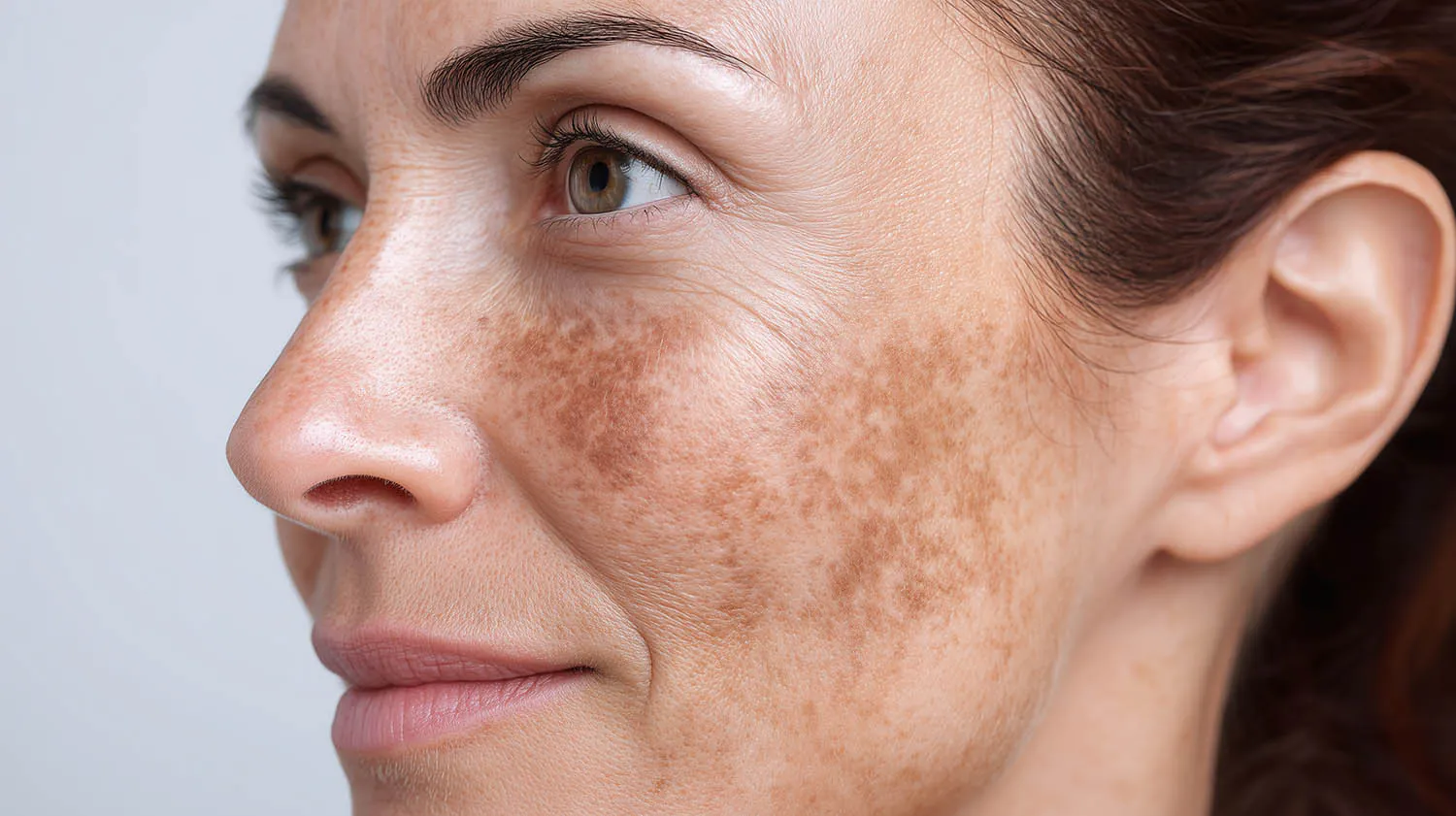
PicoSure Pro reaches pigment wherever it sits in the skin: surface sun damage, mid-dermal melasma, or the deep dermal pigment behind conditions like Nevus of Ota. At DrMedispa, we use it for a range of pigmentation concerns and for the broader skin quality changes that often accompany them.
Skin is cleansed and numbing cream is applied. Protective eyewear goes on before the laser starts.
Your practitioner selects the right wavelength (532, 755 or 1064nm), energy level and spot size for your skin and the condition being treated. Nothing is set to a default. The handpiece moves over the area in passes. Most people describe the sensation as a mild snap or pinch, like a rubber band flicked at close range. There’s a faint smell and a clicking sound from the device.
Skin can feel like mild sunburn for a few hours. Cooling and SPF go on before you leave, and you’ll get aftercare advice specific to the wavelength and protocol used.
Any of ours
Any of ours
Or Signature Serum Light
Daily protection
Exosome Barrier Repair or Night Recovery
Total value £330 included
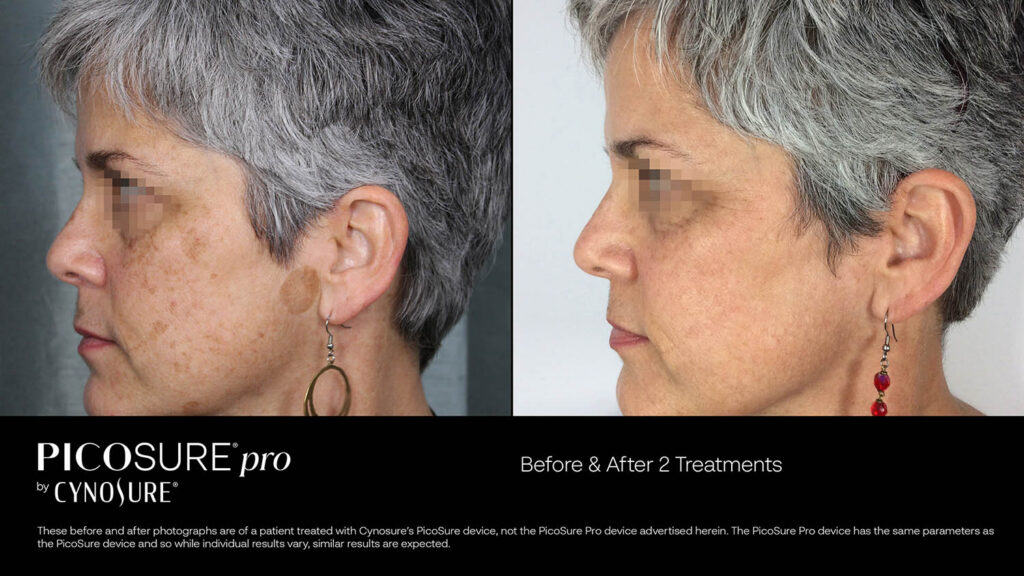
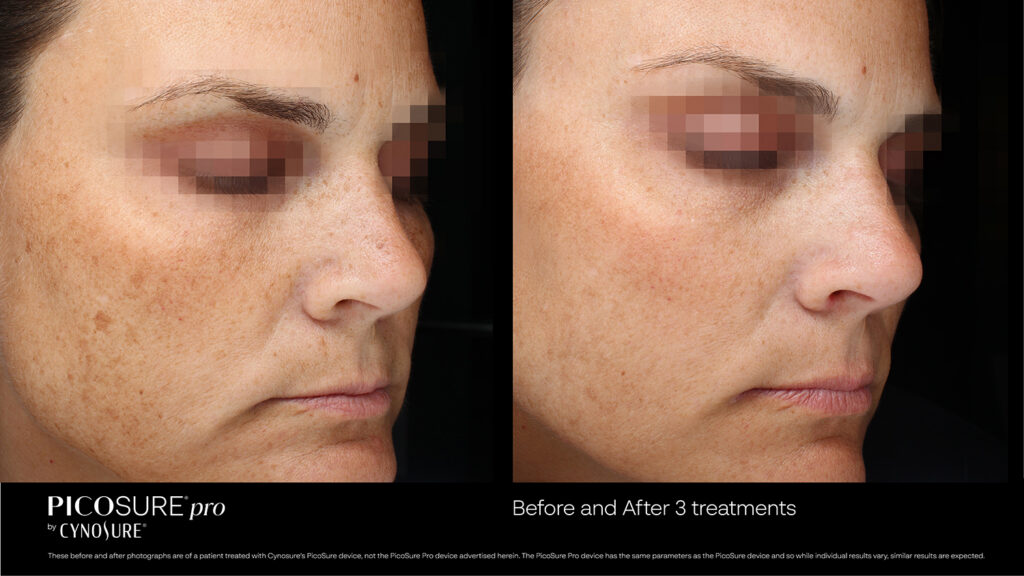
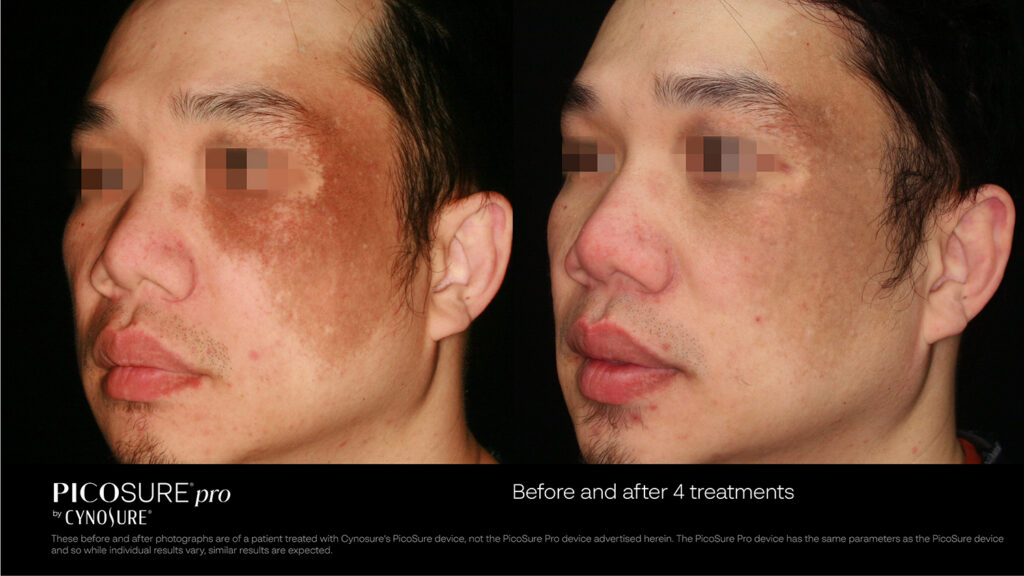
Older lasers (Q-switched, IPL) rely mostly on heat. They warm pigment until it breaks down, and warm the surrounding skin in the process. PicoSure Pro is fast enough to shatter pigment through pressure waves instead: the photoacoustic effect. This results in less thermal damage, lower rates of post-inflammatory hyperpigmentation, and safety across a much wider range of skin types.
Yes. It’s one of the main reasons we use it. The photoacoustic mechanism causes far less heat-related side effects than older lasers, and the 755nm wavelength is optimised for melanin without generating the heat that causes PIH. Published comparative studies show significantly lower PIH rates than with Q-switched alternatives. Prep and aftercare still matter in darker skin, possibly more than in lighter skin types.
This depends on your concern and your skin health. As an approximation.
We’ll give you a specific answer at your consultation. A course of three is our standard offer.
15 to 45 minutes of actual laser time, depending on the area and condition. You’ll be in clinic for longer because numbing cream needs 30 to 45 minutes to take effect first.
Most people describe it as a mild snap or pinch, like a rubber band flicked against the skin. Topical numbing cream goes on first. Afterwards, skin can feel like mild sunburn for a few hours before it settles.
Minimal. A few hours of redness or slight swelling, usually gone the same day. The treated area may darken slightly before it lightens — pigment lifting before the body clears it — and that’s part of how the treatment works. Most people go back to normal activities the same day.
Face, neck and body. We’ll go over the right plan at consultation.
Treatment isn’t suitable if you’re pregnant or breastfeeding, have an active skin infection in the treatment area, are taking isotretinoin (Roaccutane) or have been in the past six months, have a history of keloid scarring, or have had recent significant sun exposure on the area. We screen for all of this at consultation.
Pigment clearance from sun damage and most general hyperpigmentation tends to be long-lasting or permanent with proper sun protection. Melasma is chronic and can come back with sun or hormones, so it may need maintenance. Collagen and texture improvements hold well.
Early improvements often show within one to two weeks of the first session as shattered melanin clears. The peak result from each session usually shows around four to six weeks afterwards. Full course results are typically reviewed three to six months after the final session.
The kit can be tailored. Mention it at consultation and we’ll work it out.
As soon as you book. Ideally about two weeks before your first session.
The skincare bonus is only included with courses of three sessions or more, since that’s the minimum needed for meaningful results in most cases.
Tattoo removal courses aren’t included in the launch offer.
We’ll assess your skin in person, give you an honest picture of what PicoSure Pro can do for your specific condition, and hand over your skincare so you can start the prep routine before session one.
